Category Archives: Food

Try a Little Tenderness

Franka Philip Dan Lepard roti dal

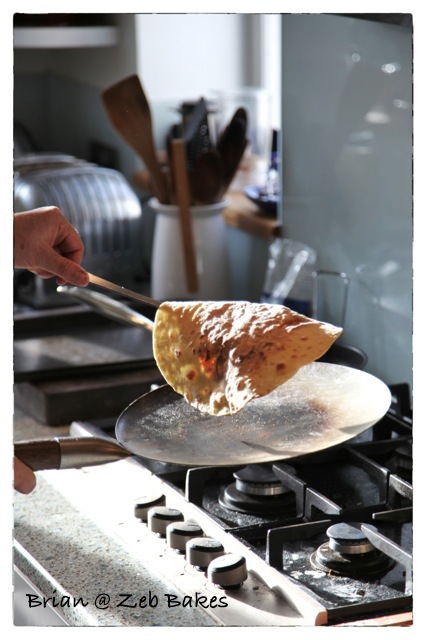
Here are some brilliant flatbreads filled with spicy dal rolled out with my magic Turkish rolling pin for Short and Tweet over this last weekend. This recipe is by Dan Lepard (P.73 of Short & Sweet, Lentil Filled Flatbreads) with the help of Franka Philip.  Check out Franka Philip’s photos of making these with Dan; she kindly gave us advice on Twitter on how to seal the little pockets of dough around the filling before rolling them out. Twitter is a funny place, I would never have thought I could ask a cook book writer I had never met for help directly but all the ones I have had contact with are extraordinarily kind and positive. Thank you once again Franka!

Franka Philip Dan Lepard roti dal

This dough was really interesting in that the dough is made without yeast or sourdough and is left to age in the fridge. Pooh pooh you might say, what difference would that make?  Well, the flat breads rolled out really easily after their long chill, puffed up in the pan and were incredibly tender to eat, light and just yummy.  If I compare them to these quick flatbreads that I made recently these Trinidadian style roti are way superior in terms of their tenderness and flavour.
Franka Philip Dan Lepard roti dal

I had every conceivable colour of dal in a scruffy box in the cupboard, waiting for me to make dal with, except I only had half the quantity of the red dal I needed for this recipe, so I added some uri dal in, thinking that would be OK. It was in the end, but whereas the red dal cooks fast and goes quite mushy, the uri dal stayed resolutely uncooked for ages and retained its shape, so when you look at the photos you can see the pattern the uri dal made. Still it wasn’t a disaster by any means!

Franka Philip Dan Lepard roti dal

I found it quite fascinating how the spiced and garlicky filling started off dark yellow and then as it cooked again within the confines of the roti turned a wonderful rich amber-red colour. I don’t know quite why it did that, the combination of spice, salt and lentils?
We used our flatbreads to scoop up a spicy pork mince dish that I made up with some ancient freezer aged mince, garlic, ginger, fresh garam marsala, a mild  chilli and a tin of tomatoes (the sort of thing I made as a student, only a bit better than my cooking abilities then)  and a little dark green fresh spinach on the side. All eaten before I thought to take a photo, oops.

Franka Philip Dan Lepard roti dal

I rolled like a demon, a rather slow demon, and B flipped the breads in the pan. The recipe made loads, so we paused half way through our roti making, ate far too much and then I made the last few balls up and put them in the fridge for a further night.

Incidentally, I also learnt that a Tequila Sunrise made with blood orange juice is called a Tequila O Positive. Dad gave me this beautiful glass when I visited him last year, he told me he bought it when he was a student so it has survived a long time.

I slept well after all that hard work, concentrating on the delicate rolling out of these breads. We watched the season finale of Borgen, best thing on TV the last month,  and shared a plate of atmospheric (dark and gloomy Copenhagen)  lemon cardamom (no baking powder this time!) madeleines made from Thane Prince’s recipe here.

——-
Franka Philip Dan Lepard roti dal

Edit: Another oops, I forgot to add this picture in!

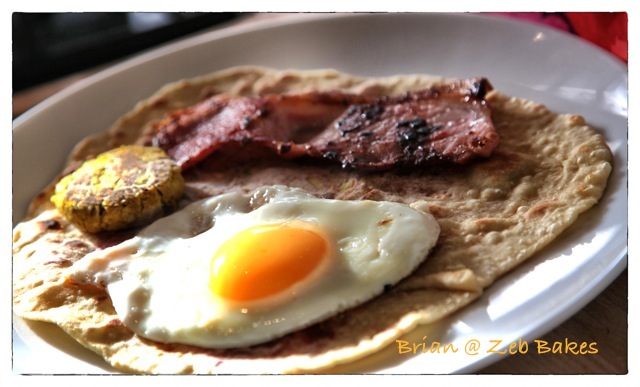
Back to the tale of the Tender Ones – The following morning I pulled the remaining balls out of the fridge (36 hours after the dough was originally mixed) and rolled them out in the early morning sunshine and we had them for breakfast topped with egg and bacon and a squirt of tomato ketchup and took sunshine filled photos to share with you.  I was so pleased the sun came out!

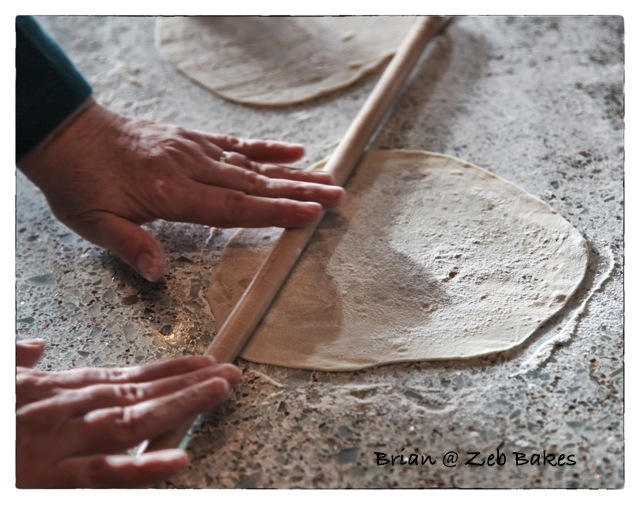
Last year we made some alloo parathas  (left) with Mellow Bakers, but they weren’t a patch on these! I will definitely make today’s recipe again. We are going to investigate making thin rolling pins from dowel as I really think it makes it much easier to roll these little quite frail balls of dough out and I would like one that is a bit shorter so I don’t hit stuff off the worktop when I am rolling.

I am getting on much better with this skinny pin than I do with my big rolling pin, or else it is just practice.

PPS Here’s Evidence Matters’s super round up post for this week’s baking. Have a peek and discover some new blogs to read and if you want to join in it’s very easy and all explained over on her blog.

What have you been up to this weekend?
Dan Lepard’s Wholemeal Bread

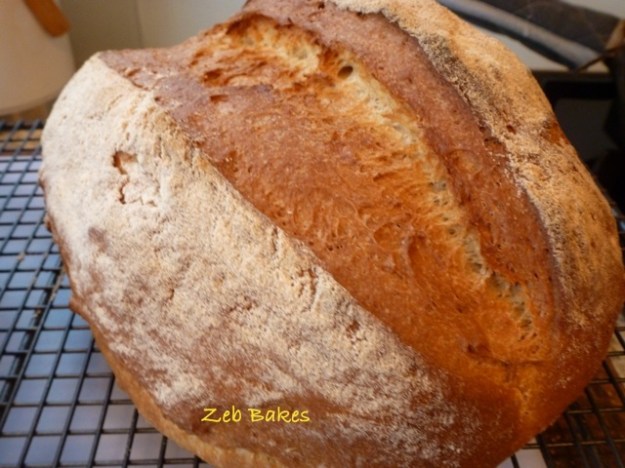
This week is the wholemeal bread challenge from Short & Sweet. You can find Felicity Cloake’s version of this recipe here on the Guardian website in which she explored different ways of approaching the wholemeal loaf and ended up liking Dan’s the best.

I made two different loaves this time; Dan helpfully writes up the recipe saying it is a starting point to finding the loaf you are happy with.

Once you have had a go at the basic one, you can move on to exciting variations like ale and spelt and unleash the creativity of your inner bread baker! I know you have one in you or you wouldn’t be reading this!

I can eat 100% rye with great delight but something about too much wheat bran gives me indigestion. English stoneground wheat is always full of huge flakes of bran and I would rather have a finer milled German style whole wheat, though it seems almost impossible to buy here in the UK. Presumably any whole grain flour will give you dietary fibre, so you could use spelt, kamut, einkorn or emmer all possibilities for getting that fibre content into your daily bread.

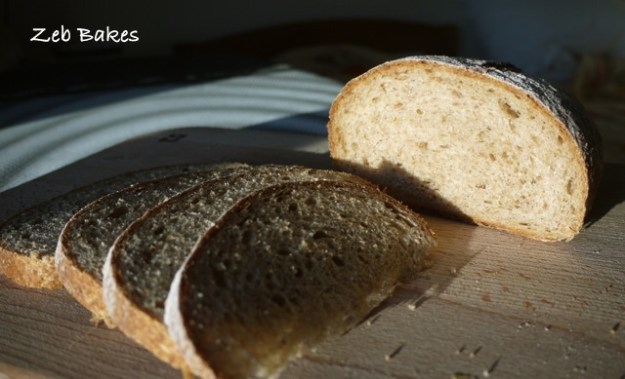
I went for a 50/50 blend of wholemeal and white in one of these loaves and of 50/50 kamut and white in the other. These breads don’t use milk, but they do use butter which improves the keeping qualities of the bread and is very traditional in English loaves.

I used regular sugar in both as per the recipe and for my money that was a mistake as I have got used to using spraymalt to sweeten Brian’s white breads and I should have used that in these. The taste of regular sugar is too much for me in bread like this, though I imagine it is there to mask the slight bitterness of the wholemeal. I wonder if apple concentrate would be nice?  It’s all about personal taste, so do vary recipes to suit your palate and experiment with sweeteners if you use them. Spraymalt is particularly nice, comes in lots of varieties, fascinating to read about it on the Muntons site.  It is fairly easy to get hold of if you have a local brewing shop or from online beer making sites and I think Bakery Bits sells it too.

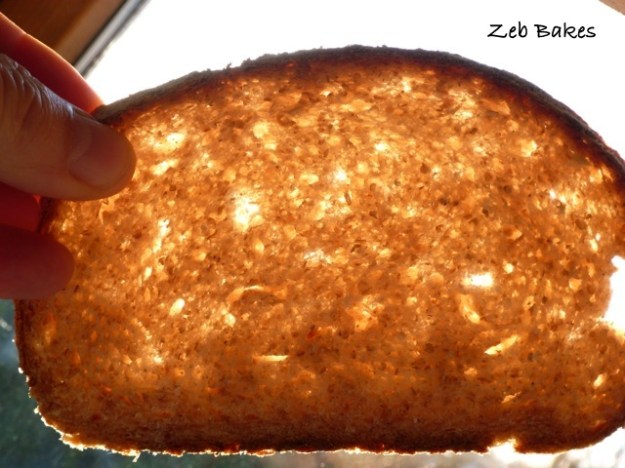
The contrast in the doughs was quite marked. Dough 1 was sedate and quiet, whereas  Dough 2 with the kamut was soft and bouncy and increased quickly in volume. Despite being a high protein flour, its gluten is very different from that of regular wheat and the surface of the dough pocketed and opened up quite a lot, giving a rugged rustic quality to the finished loaf. I couldn’t get it to form a smooth sheath at all on shaping. It also sprang dramatically in the oven unlike the wheat one which rose a bit but didn’t do anything very exciting.

Both loaves make light sweet bread, easy for toast, very English in style. Not quite my thing but I am sure the sort of bread that pleases many people. it’s a very easy recipe for beginners to follow too, watch the timings, handle the dough gently, if you are not sure about shaping it use a tin which you butter and dust with flour and you’ll be fine.

For a forthright discussion about the role of fibre in our diets and the ramifications for children’s health in particular read Lou’s  post on Please Do Not Feed the Animals.

For the round up post for last week’s sweetie extravaganza and some fascinating links click here and have a peek at the other round ups for the Shortandtweet group. Join in any time you feel like it, all welcome!

Edit: 

Just thought I’d add a few links to other bread posts which incorporate wholemeal flour but are very different from this one….

For a sourdough bread using mainly wholemeal have a look at this old post of mine from the Mellow Bakers project with the grand name of Miche Pointe-a-Calliere. Another very good bread is this Rustic Bread which uses a mix of flours, including wholemeal to produce a very pleasing loaf and in which I incorporated some left yoghurt whey.

 Another very popular bread that uses wholemeal flour is Dan Lepard’s Golspie Loaf, one of the star breads in the Hand Made Loaf. This is one I make regularly for my neighbour who is a big wholemeal fan. There is a picture of it in this little slideshow post.

Apple Bonanza Autumn

A rare sight in my garden in October. I know these little guys are common elsewhere in the world but not in my patch….

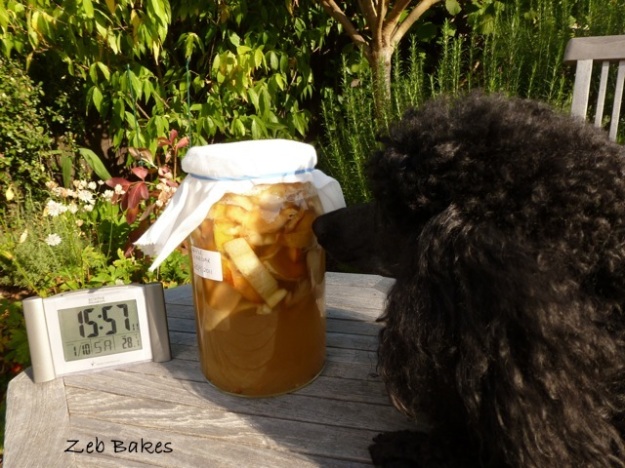
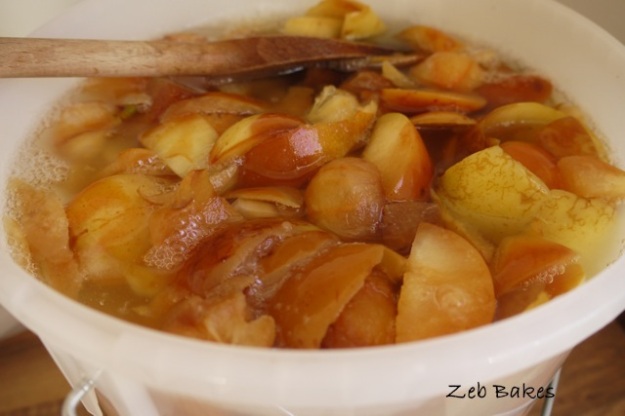
In case you were wondering, the apple cider vinegar saga started in the latter part of this post has rumbled on gently for a month; from our heat wave in the early part of the month till the cooler wetter weather we are currently enjoying the house has been swamped with apples.

The fruit flies have been and gone, lured into the laundry room by the sweet smell of sugary apples, only one managed to fall in one morning – now the first batch is on the way to becoming vinegar slowly but surely. I have a second batch of apples bubbling away cheerily, a small sup of home made cider in the mornings definitely wakes you up!

We peer in most mornings and have a sniff to see how it’s changed and it’s coming along nicely.

Vinegar production, from what I understand from conversation and a little bit of reading, is a slow process and relies ultimately on acetobacter landing on the liquid to convert any alcohol to vinegar.

Like many of these fermentation projects the trick is to get the right bacteria in there at the right point in the process, so like sourdough starters, sometimes it’s good to have a little help from your friends.

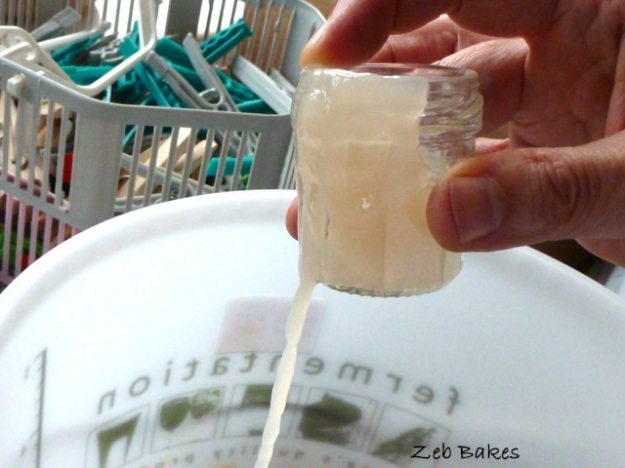
I was given some acetobacter (it looks like a semi translucent bit of jelly) by Mitch and popped it into the brew and it is working beautifully. I asked a cider seller at the local market whether they had it, but he looked shifty and claimed that vinegar took five years to make and was less than helpful on the subject. Maybe some special aged balsamic variety takes that long and I have no doubt that vinegar matures and evolves over time too, but it would seem possible to get something serviceable within a few months.  For much more detail and delightful writing on this exciting process I recommend visiting Miskmask’s Vinegar Diaries now on Day 30. and also the guy who kickstarted us all making it, Carl Legge whose blog is looking very smart, all kitted out in its new theme.

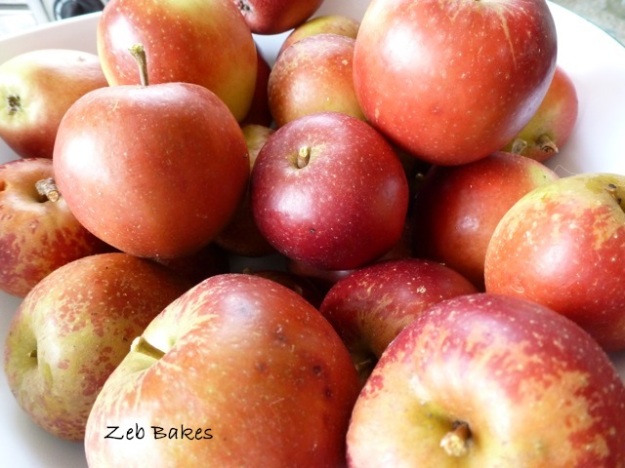
My neighbours’ apple trees are still chucking them down and I still keep getting gifted more. It has been an outstanding season for apples here, the long mild autumn weather allowing fruit to ripen fully on the trees.

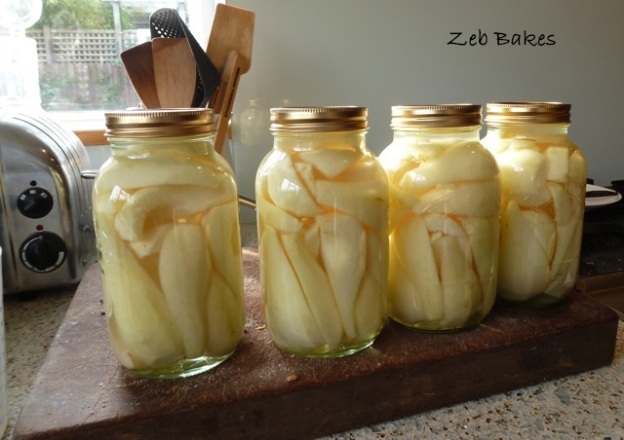
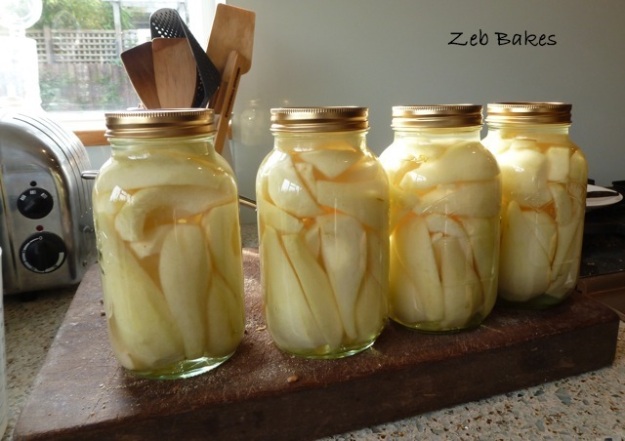
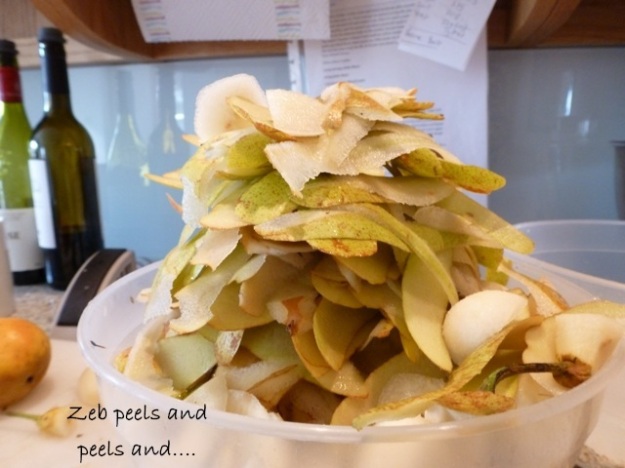
Over last weekend we finally dealt with the outstanding Concorde pears from our garden tree. We peeled and quartered them, left them in a bowl of salted water with citric acid while we puzzled over the mysteries of the screw top Kilner jars, and I think, hope, have successfully managed to bottle six big jars of garden pears in a vanilla sugar syrup. Brian took on the job of packing, saying it reminded him of Meccano. I think he did a great job!   We followed Pam Corbin as usual from her book Preserves and used an oven water bath method.

While slowly doing this I thought about the women who must have spent weeks preparing and bottling fruits not so many years ago. I grumble at peeling pears for an afternoon, I don’t know if I could do it for days and days at a time, but if needs must then one finds a way I suppose and the satisfaction from knowing you have preserved something you have grown yourself, even in relatively small quantities as a townie like me does, is immense.

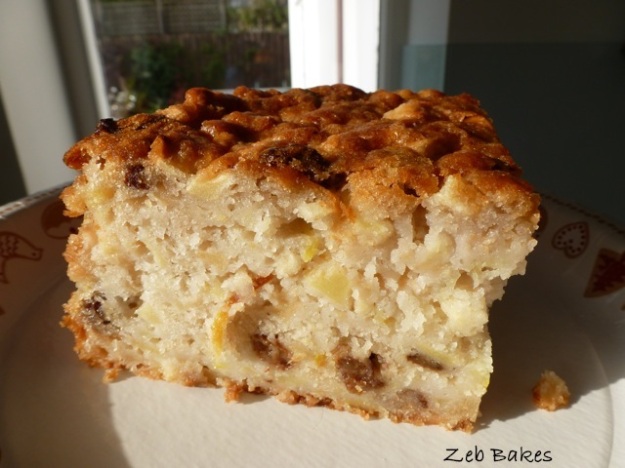
I also made a lovely olive oil and apple cake – quite different in texture from the Ottolenghi cakes I made recently and much simpler in method, though it does take an age to prepare the fruit if you’re me, easily distracted.  This cake’s recipe was shared by Carla Tomasi on Facebook and is based on an Anna del Conti recipe so it has an excellent lineage. I hope I did it justice. Carla has kindly put the recipe on her new blog here.

It uses a huge quantity of fresh fruit and has a wonderful light pudding texture. I have put one in the freezer and distributed others to the neighbours who promptly give me more apples back in return. Hey ho. Apples everywhere.

NB I found some left over chopped apple from this cake in the fridge, I had doused them in lemon juice and they had kept well. I fried them in some bacon fat, Mr Misk Style, and slapped them with the bacon between two pieces of sourcream sandwich bread and a

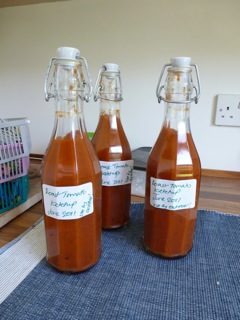
dollop of home made tomato ketchup, again the recipe for that is in the Pam Corbin book and several people have blogged their versions. Please see the comments on this Tomato passata post if you want to follow this up.