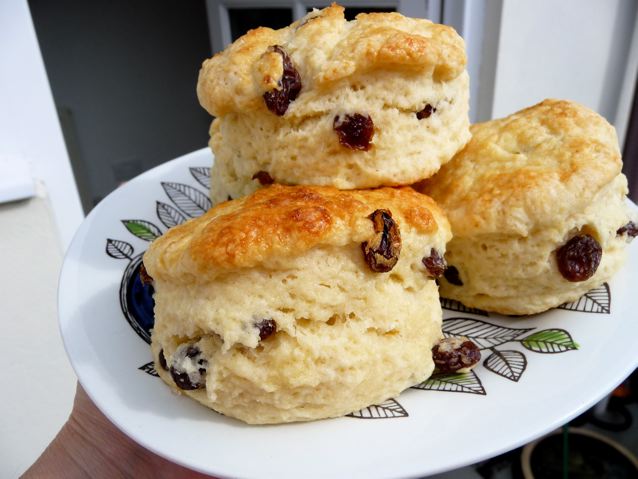
These have two claims to fame, one they are made with home cultured buttermilk and, two they are made with 00 Italian flour. Actually they have three claims to fame, they are light and utterly lovely and I was really proud of myself as I usually make rubbish scones. However Brian ate, let me whisper it … five of these in one go… then he didn’t want supper, what a surprise.
There. That’s all. Thank you Rachel Allen, I love your book, Bake. It doesn’t scare me like some cook books do.
I’ve made several things from it now and so far so good. I just looked and the scone recipe is here on the net. So there is no excuse for anyone not to join in.
Am I alone in preferring boiled to roasted beetroots?
Ready for the fridge!
Every time I have tried the fashionable roast veg treatment on beetroots it has taken longer to cook them, been harder to peel them, and made very little difference to the taste that I can notice, and given a harder textured, denser end result. I love red peppers, courgettes, sweet potatoes and garlic roasted with a sprig or two of rosemary and a scatter of sea salt and so on, sweet, sticky and delicious, but beetroot?
I like beetroots boiled, old fashioned as it sounds, they come out easy to peel, moist and shiny and make beautiful beetroot and onion salad.
700 grams or so of fresh beetroot
1 or two large Spanish onions (depends how much you like onion and how big your onions are)
Bunch of fresh dill (frozen will do if you haven’t got fresh dill)
Sugar
Salt
White Pepper (Black if you haven’t got white is fine)
Vinegar of your choice – Red or White wine vinegar is good, or Rice vinegar or a mixture with a little Balsamic thrown in to the mix.
Water
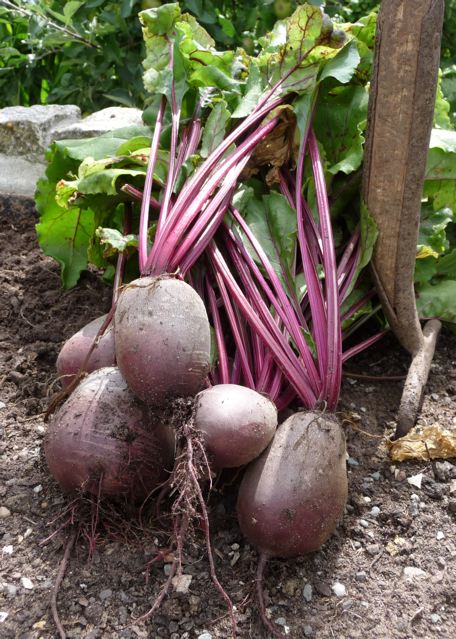
Meant to use this picture before
Trim the leaves off the beetroot leaving an inch of so of shoots, leave the roots on the beetroots and boil them whole, resisting the urge to scrub or cut off any little hairy bits, they just bleed more whilst cooking.
Cover in lots of cold water and bring to boil and continue to boil until they are soft. Anything from 40 minutes to an hour and a half, depending on size and age of beetroots.
Peel the beetroots while still hot, the skins will come away easily.
Slice onions into thin rounds. Slice beetroots similarly into rounds. Dilute your chosen vinegar with water. Maybe 1/3 vinegar to 2/3 water, I do it slightly differently each time.
Layer your beetroots and onions in a dish, sprinkling with salt, sugar and white pepper between each layer and if you like dill, put fresh finely chopped dill in with each layer. Then pour the vinegar mixture over the whole lot, it doesn’t have to cover completely as you will turn the salad the following day and there will be more liquid which has come out of the vegetables by then.
Cling film the top of the bowl and put it in the fridge. Turn once a day for about three to four days. Once the onions have turned a good beetroot red colour and began to soften/pickle you can eat it any time after that. Test for readiness by nibbling on a piece of onion!
I haven’t given quantities as people’s tastes vary so much. For a saltier pickle use 1 tbsp of sugar to 1 tbsp salt, and 1/2 tsp of pepper, for a sweeter pickle increase the sugar to 2 tbsp to 1 tbps of salt. This should keep for at least 10 days or so in the fridge, if you want to make a pickle that keeps for longer then you will need to use sterile jars and a different method.
Serve with anything you fancy, and watch the glorious pinks bleed across your plate causing chaos.
With yoghurt, lime and a twist of black pepper
PS
Just came across a much simpler salad treatment from the Riverford Veg Blog. This is where these beetroots originated from (as small seedlings in a planting out box that we got in the Spring). Guy boils his beetroots too, so I am not alone ! But thanks for reading this post anyway.
So here’s what became of that big basket of blackberries we picked on Sunday.
Testing for Pectin – how on earth do you know how much pectin is in any particular batch of fruit? There are guidelines, Pam Corbin has a helpful list in her book ‘Preserves’ in which it says things like ‘early blackberries, medium pectin,low acid, late blackberries, low pectin’… but I am not that experienced in jam making that I can then instinctively know what to do next. Having had the experience of the damson jam setting like concrete once and being determined never to have that happen again, I veer the other way and often make runny slippery jams that slide off the toast and onto my lap….
So each time I make jam, three or four times a year at most, I re-read my books, looking for any pearl of wisdom, this time I found something good on a site called Jam World which is full of detail, even if the bit about making jam for competitions is a bit beyond me and it is the Jam World formula I have used this time.
How to test for pectin:
When you have prepared the juice for the jelly (more of this later) this is the time to test for pectin.
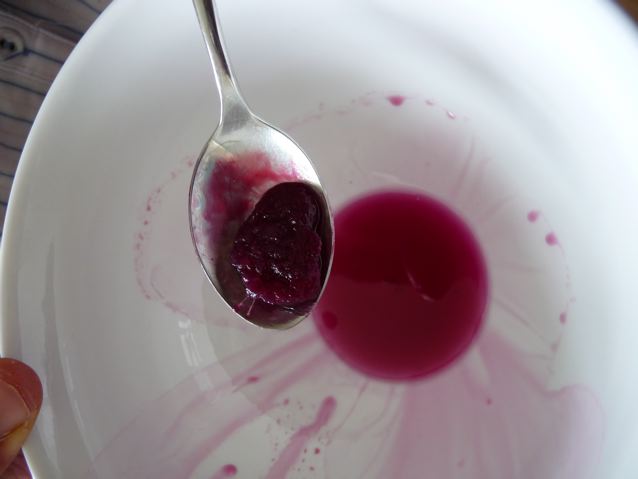
Place a teaspoon of the juice in a small cup and add two teaspoons of methylated spirits to it. Give it a little swoosh to mix and then leave to stand for a few minutes. Then have a look. Pour away the liquid spirits which will leave the jelly liquid behind. See how solid it is, if it is solid then the pectin content of your juice is high and you will get a good set and not need to add anything in the way of additional pectin. (I’ve also read recently that you can use whisky if you don’t have any methylated spirits, but I haven’t tried it.)
Looks like it gelled all right!
My jam was made with:
5 and a half pounds of blackberries
6 tablespoons of lemon juice
600 ml water
Brought to a boil and then left to simmer gently to release all the juice from the berries. Put all the fruit into a jelly bag and left it to drip through for most of the day. Then did the pectin test as above, which showed there was enough pectin and then I put the juice in the fridge over night and carried on the next day.
First thing I put some saucers in the freezer to help me test the set later and prepared the jars, keeping them in the oven until they were needed.
Then I measured the quantity of juice
You then add 1lb of sugar for every 600 ml/pint of juice. For this batch that was 1230 grams of sugar. I used preserving sugar which has larger crystals and has a reputation for giving a better jam.
I warmed the sugar in the oven first and added it slowly to the juice, making sure the sugar was completely dissolved before bringing it up to the boil.
I did quite a lot of skimming and saved the scumble (the jammy scum which I think is very tasty though it doesn’t look that pretty) which I will have on my toast this week.
Scumble skimmed off the top of the cooking jam
Using a sugar thermomenter we started testing for a set once the temperature got to 104 C. Jellies usually set between 104 and 106c. Ours set after about 12 minutes altogether and had reached a temperature of 106 C. We did three checks during that time, turning the gas off while we checked.
Check for a set by putting a little of the hot jelly on a cold saucer, leave for a few minutes and then push it gently with your finger, it if wrinkles as you push it, it is ready. Another thing you can do is hold a wooden spoon over your pan and observe the drips, if they look like they are setting that is another clue.
Brian carefully filled the jars and put the lids on (they had been simmering in a saucepan of water) and I wrote some labels this morning and here they are.
A tower of jam
Just under 5 lbs of jam to look forward to sharing around with family and friends.
Jam jars with spotty lids came from the jamjarshop website by the way. We ran out of small jars last year so I ordered these when they were on sale. Some friends are good and keep all their jars to give to us… and then they get more jam!
As it is only the beginning of the season I may go back to pick some more before the month is over… Today I came home with a bag of mirabelle plums, red and yellow, like over sized cherries, might be good in a clafoutis pudding? Never made one of those yet…
One year on.… Lots of people seem to read this post still, and I had another look at it this August (2011) as Carl Legge had kindly suggested it as a good read on Twitter. I realise that I never posted a picture of the jelly itself. What an omission! Believe it or not, I have one jar left in the garage and tonight I dug it out and opened it and here is a quick photo. It has darkened a little and become a little grainy in texture; it is a year old but it still has that wonderful complex fruity taste that sings of the English countryside. I love blackberry jelly!






 Zeb Bakes