Category Archives: Wild Food

Wild Cherry Jam

2nd July 2010

As I trailed around the local woodland with the dogs I looked at the wildflower meadows planted by the schoolchildren a few years ago and thought that I must get better at flower identification. It’s on my list of things to learn…

Wildflowers sown by the local infants school

Then I noticed something…

What’s that in that tree?

A quick investigation revealed:

Cherries – billions of them!

Small, sour-sweet, dark and juicy, trees full of them!  I don’t remember seeing these at all last year…and they’re everywhere, trees full of them, dark red, bright red, big ones, small ones…

Never being without a bag, I’m a dog walker remember? I stood and picked a dog bag full, about 3lbs in weight. I looked as if I was a member of the cast of the recent promenade version of Macbeth the students did here with my hands stained red with cherry juices.

At home, I washed and sorted my cherries out.
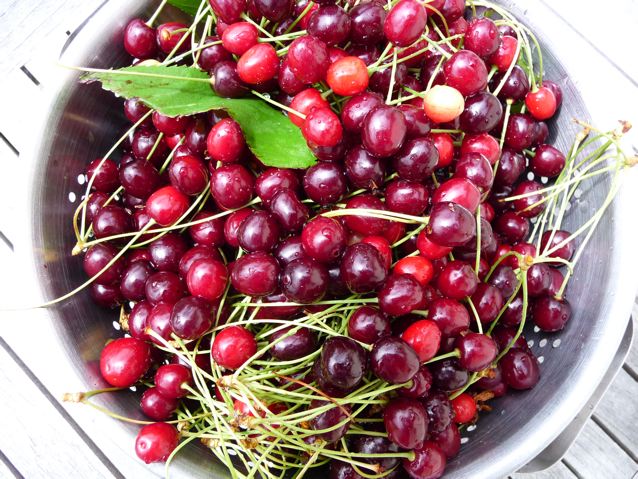
Beauty in a colander

Then consulted Pam Corbin; no cherry jam recipe. Cherries, high in acid and medium pectin it said though. So I de-stoned them, one of those contemplative activities, in which one half of the brain says, ‘I can’t believe you’re doing this’, and the other half says, ‘Yeah, yeah, but once in a while it’s fine to do this and you started this by picking them in the first place so just get on with it. ‘

Then I washed the fruit, put them in a pan to heat up and gently cooked them till the skins had softened. Don’t add sugar till the skins are soft.  Added the sugar, heated it till it dissolved, completely, added the juice of a lemon and a little commercial pectin and then brought it to a roiling boil (I love that word!) and it was ready in about 7 minutes. I use a sugar thermometer to monitor the temperature, usual setting point is 104 – 106 C.  Test for a set by putting a teaspoon of jam on a cold saucer,  turn off the boiling jam while you wait to see if it has set enough. It should wrinkle slightly when you nudge the test spoonful once cooled.  If it hasn’t then turn the heat back up again and bring it up to temperature once more.

Tip: the time to stir is when you are slowly dissolving the sugar, once you start boiling the jam, don’t stir as it stops the jam coming up to temperature quickly which is what you want, in order to have a nice fresh tasting jam.

This first batch pictured here was made with 50 percent sugar to fruit weight and was destined to go in the fridge and be eaten quickly. I wanted a tart jam that really tasted of cherries.  I made a second lot later with 1 kg of sugar to 750 g fruit that was hopefully to be kept longer. But I was guessing here as to what the correct ratio is. Edit: I have done a little bit more research and the most commonly advised proportions are :  60 per cent sugar to 100 per cent fruit weight. If the cherries are sweet then add a tablespoon of lemon juice for each kilo of fruit. You will probably need to add some pectin, either home made or commercial.  Suggested proportions and lots more useful information can be found here where I found it on the Allotment Vegetable Growing site.

Bubble, bubble…

I love cherries and cherry jam is my joint favourite jam along with damsons, and I’m down to my last jar of that, so the cherries should keep me going for now :)

Wild Cherry Jam

And here it is for breakfast on some of that soya linseed bread that makes fabulous toast….an all time favourite Dan Lepard Guardian recipe.

Cherry jam on soya linseed toast
Around and about (1)

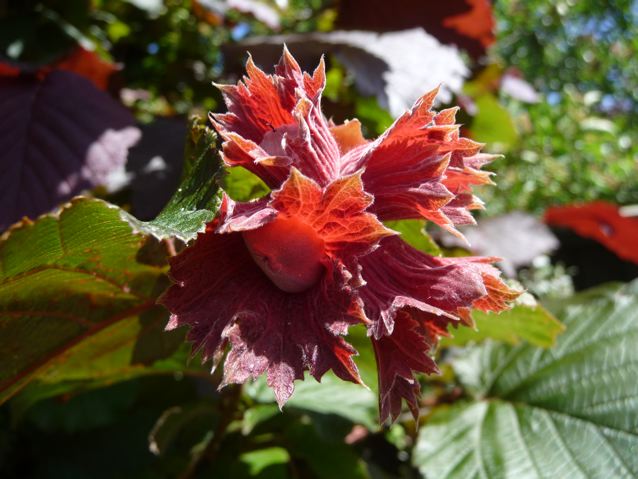
The nuts are on their way…

In the garden the catkins have been replaced by nuts…

The second batch of ‘cold’ steeped elderflower cordial

On the kitchen window is the second lot of cordial, made differently from the first. Time will tell if they fizz, bubble, explode…. how exciting !

As inspired by Celia of Fig Jam and Lime Cordial

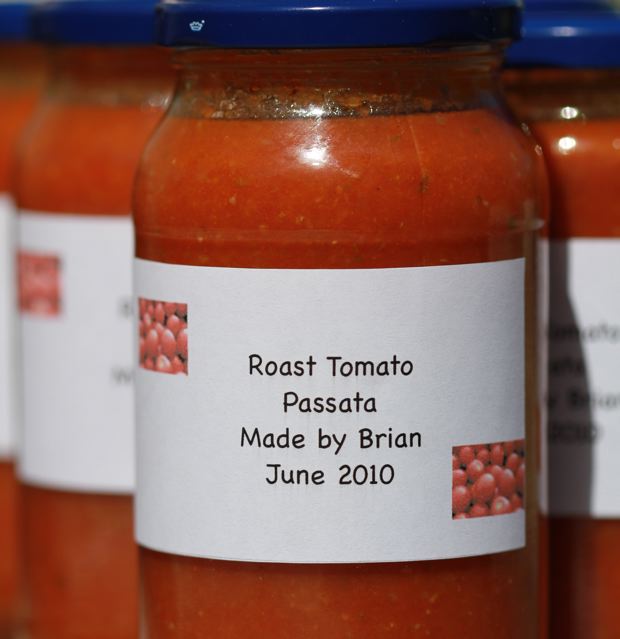
Jars of this and more tomato things are looking for a home on the shelves of the garage following Brian’s purchase of 12 kg of tomatoes the other week.

A rolled up babka thingy

One bit of test baking that sort of worked. But I can’t give you the recipe….

The lime trees are flowering….

I am going to  harvest some of the flowers and make my own linden blossom tea this autumn.  Lime trees, beloved of town planners for their sticky sap which stops people parking under them, and a great and glorious tree when left unpollarded like this one at Ashton Court.

American Readers please note : this isn’t a citrus lime tree (Citrus aurantifolia), but a tree also known as a small-leaved lime, one of the family of tilia trees and yes they get big! In England the tilia are commonly called lime trees. This is not confusing for English people as we don’t have citrus trees growing outdoor as you do in the USA, only a few in conservatories behind glass. I have just had a little scoot around and in the US they are usually known as linden trees. The tea made from the blossom of this tree is variously known as limeflower blossom tea, limeflower tea, linden tea, tilleul in French. Widely drunk in Europe, (Proust et al) and it is one of the safest teas to drink in the herbal range. I have some lovely scent from Jo Malone which is lime blossom too. You could say I am a bit of a limey :)

Elderflower Cordial Part 3

At last…

The following day we studied the instructions again. One thing I forgot to say; you need a thermometer. If you are going to do any of these recipes, it is essential. That and this book and you won’t go too wrong!

Pam Corbin’s method gives a cordial that you can keep on the shelf. Other methods give a result which you have to keep in the fridge, like the Jam Jar Shop Guide to Elderflower Cordial.

The alternatives have some version of making a sugar syrup first, then adding the flowers. Some recipes add chopped up whole citrus fruit rather than zest.  That method presumably is gentler on the flowers and you might get a more fragrant though shorter lived cordial that way.  There is a risk of mould if you don’t use a sterilising water bath to process the bottles and want to keep the cordial out of the fridge in storage.

Filtration:  Brian poured the liquor  carefully out of the bucket where the flower heads and zest had been soaking overnight into another container and strained it through a muslin bag to remove particles. The liquid was very dark and we worried that we were gong to end up with a brown cordial.

Then we did some sums;  1.5 litres of liquid to 1 kg of granulated sugar plus one heaped teaspoon of citric acid were the proportions used.

We added all of the lemon and orange juices reserved from the previous day, about 500 ml, to the strained liquor, sugar and citric acid. Heated it up slowly to dissolve the sugar and then realised that we had forgotten to strain the citrus juice, so we put the whole lot through muslin again. Twice.  A mistake that could be fixed! No floaty particles now!

Our jam pan held 4.5 litres worth of liquid so that’s what we worked with.

We sterilized the bottles and  Brian carefully simmered the cordial. It stayed a murky brown. I took a spoonful and put it in a glass and diluted it to see what it tasted of. Not quite right somehow, but I couldn’t work out why.  A little bitter, a little polleny, not what I expected.

I went away to do something and when I came back Brian had transformed the cordial. The secret was buried in Pam’s notes:   it has to come up to  88° – 90° C whilst being simmered, for two minutes, this not only extends the shelf life but transformed the cordial into a paler and brighter fluid. Now it tasted right, silky, floral and citrussy. For a moment there I thought we were going to have to chuck the lot!

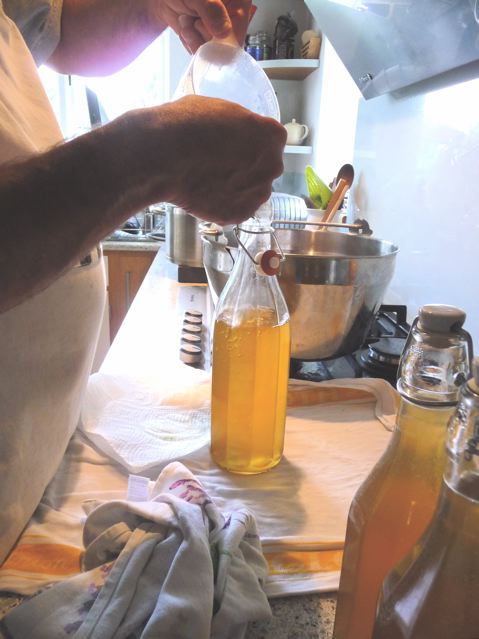
Much happier now, Brian proceeded to fill the bottles leaving a gap of an inch at the top for expansion in the final stage.

He then arranged them in two waterbaths, positioning the bottles so they didn’t touch the sides of the pan and standing them on folded tea towels. Tops on bottles not done up tight at this point.

The water was brought up to 88° C and kept there for 20 minutes. A thermometer is essential!

After this, he hoiked them out and tightened the tops.

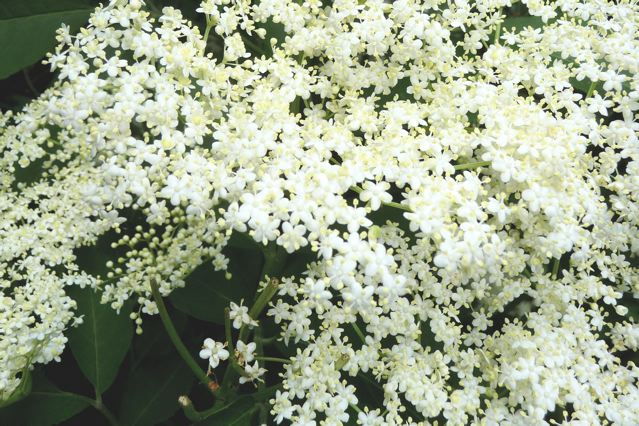
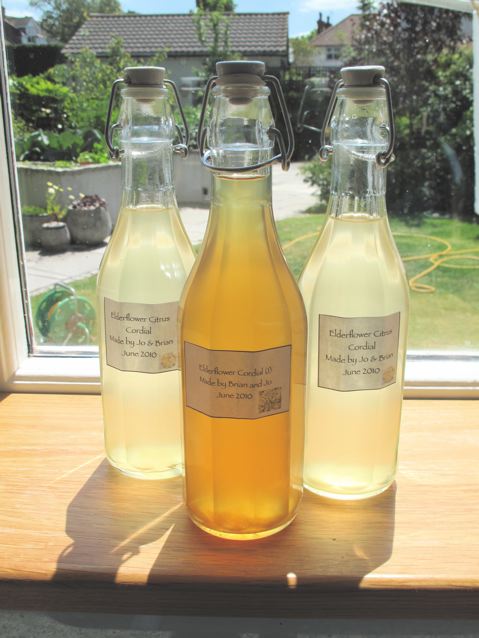
Bottles of golden June delight! I found some ancient sheets of label paper and used one of the photos as a background image for these labels.

Thank you Pam and thank you Brian, chief bottler and preserver!  A summer of delightful elderflower spritzers beckons….

Edit: Later in the month  when we were “Around and About” we made a second batch using a cold steep method. This batch was a lot more lemony and had less of the elderflower aroma too it, but had a much paler colour.