Westphalian Pumpernickel by Post

Bread all over the place

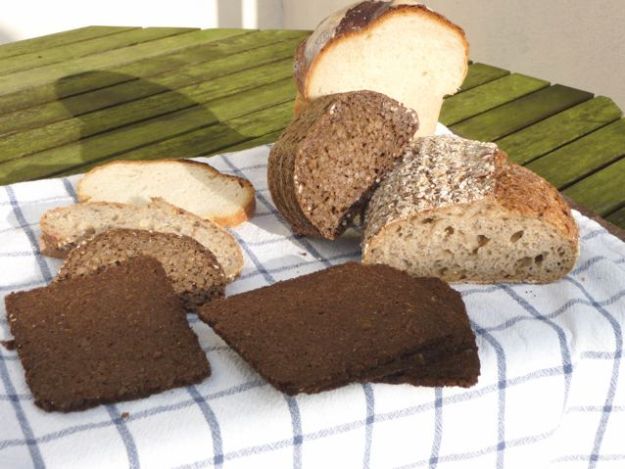
Here is the current crop of breads at home spread out in the watery November sunshine between showers of rain.

From back to front:

Dan Lepard’s delicate milk loaf, good for toast, holding poached eggs and Brian’s favourite white bread.

A 7 seeded bread from Marks Bread in Bedminster. I’m working my way through his breads to see what they are all like. This is one is a nice, nutty seedy bread.

My Horst Bandel rye bread – you’ve met before!

Westphalian Pumpernickel kindly sent to me by Ulrike who is a Mellow Baking friend for me to compare with the Horst Bandel rye bread.

I eat them all but Brian will only eat the first two and he is not too sure about the seeds, though he will eat rye bread if it has caraway in.  So I couldn’t ask anyone else’s opinion here. I am not particularly good at describing tastes but I will give it a shot…
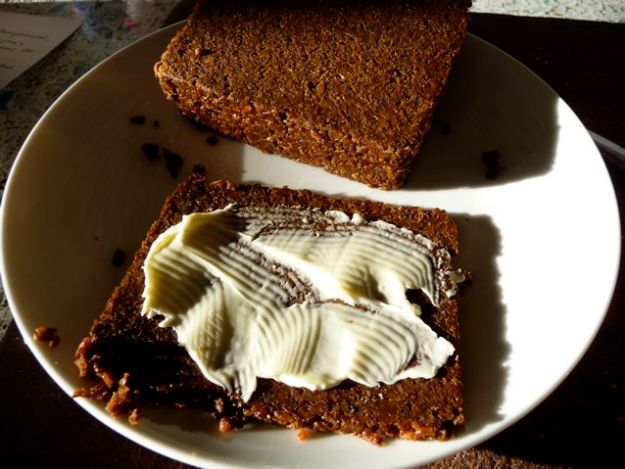
Taste test
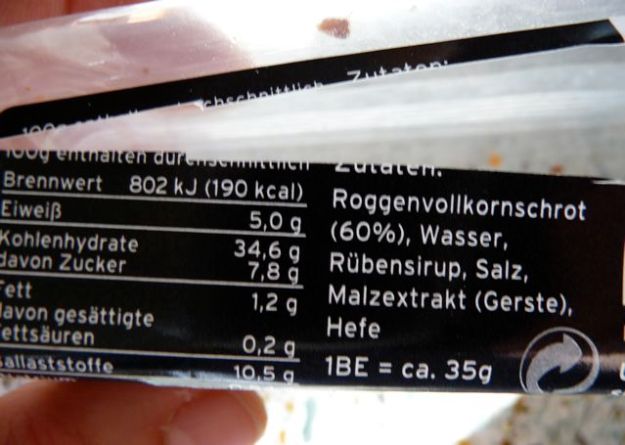
What's in the Westphalian Pumpernickel?

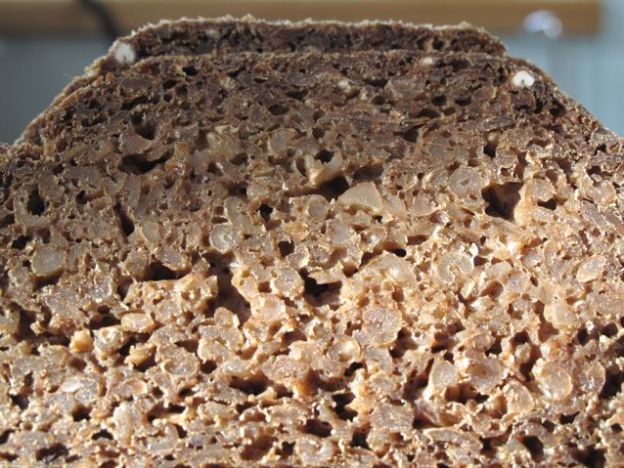
Pumpernickel to a German bread eater means exactly this bread, dark and sweet, soft and dense, made only of very coarse ground rye (meal or Schrot), molasses, malted rye,*  water, salt and yeast and baked for a very long time indeed. Looking at this bread it is quite distinctive and it has a unique texture and taste.

At a guess it doesn’t include whole grains soaked and boiled like the Jeffrey Hamelman bread.

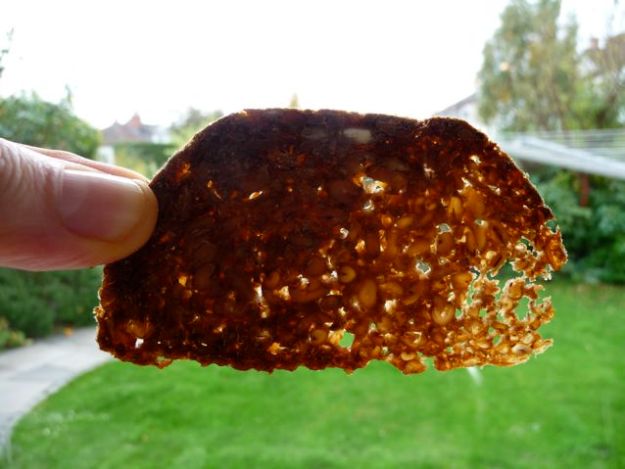
Pumpernickel close up

Taste wise I am biased towards my own breads. I think that’s because I am used to them.   My version of the Jeffrey Hamelman recipe is more chewy and grainy and it has a sourer taste too, which might be down to the long second prove it had this time round. It is not as sweet as the traditional pumpernickel, but then it only baked for about 5 hours as opposed to 20! My bread reminds me of the Danish and German Vollkorn breads more with its paler colour and chunkier texture.

What’s really interesting is I just Googled to see what was available here and look here is an export Pumpernickel from the same  German company with an English label which is slightly different. It doesn’t mention molasses and has slightly less rye content. Do you think it has been ‘tweaked’ for the English market?  I know all manner of products are changed slightly to make them more acceptable when they travel abroad, it looks as if pumpernickel does that too.

I have a similar reaction to Ulrike’s when I come across bright orange plastic cheese called Cheddar in, say, a Canadian supermarket. But apparently my Cheddar is only one sort of Cheddar, my sort has a special title  ‘West Country Farmhouse Cheddar’ . OK, I didn’t know that, thanks Wiki!  I suspect that not many people outside the food production world know that certain names are protected or have to be phrased in a particular way. Cheddar is just another word for a medium hard cheese to most people.(My favourite Cheddar ever by the way is made by Keens with unpasteurized milk.)

A little Keens Cheddar on Beer Bread

Only cheese produced and sourced in the English counties of Somerset, Devon, Dorset, and Cornwall may be given the Protected Designation of Origin name “West Country Farmhouse Cheddar”.[3]

Maybe they should do the same for Westphalian Pumpernickel? I am sure it would count as a TSG if not a PGS. You can find out more about this complex area of protected names here on Wikipedia. I looked up Pumpernickel on the DOOR database but I couldn’t find it, though I did find Nurnberger Lebkuchen !

Do you have a treasured foodstuff that has been changed completely in its travels across the world?
Edit : * Jacqueline has given a great translation of the label below in her comment. Thanks Jacqueline!
Horst Bandel Crumb rye bread

Hamelman’s Horst Bandel Rye Bread in a Milk Loaf Tin

Horst Bandel black rye pumpernickel Jeffrey Hamelman

Photo by Brian

It’s that bread again!  (the long slow baked rye grain bread with the great back story in Bread by Jeffrey Hamelman) which is one of the Mellow Bakers November breads.

I posted my last year’s version of this a little while ago but I have made it again – practice, munch, practice. It’s fun!

A little Swedish Kaviar

I had a long think about how you could manage this bread without a pullman. I think the answer, (and I will make it a third time to test it out by the end of the month I hope)  is to use a regular loaf pan and once the dough is in the tin, grease and flour a sheet of foil, and  place it over the top of the tin and either wrap the whole tin in foil tightly or tie it on with string round the rim of the tin. Alternatively if you don’t mind what shape your bread comes out, use any bake proof container that has a sealable lid, so a pudding basin or a cast iron pot or something like that.

Mise en place

The key thing is to keep the moisture in during the long gentle bake.

My other tips are

Rye grain

Raw and Cooked Rye Grain

  1. Make sure the grains (use wheat if you can’t get hold of rye) are well soaked and really well cooked so they are plump and moist and soft. They act as storage for the water during the bake.
  2. Old Bread Soaker

    Slice the old bread thinly and bake it a bit more in the oven before you soak it. Only use as much water as you need to cover it; you are only going to have to squeeze the water out later after all.

  3. The hardest bit is judging how wet to make the dough, too wet and the bread will never really dry out enough, too dry and it will be a bit chewier than you want.  That’s not very helpful but everyone’s combination of grains and breads is going to vary. I think I would want to go for a dough that I can shape into a baton that I can pick up without it breaking apart the moment I lift it from the bench, so go for firmer rather than wetter.

Another experiment revealed!

I have a milk loaf tin which has a clip on lid so I thought I would try it out in that. In my mind the bread would rise, slowly into the top half and I would have incredibly sophisticated round slices of bread, perfect for canapes.  The drawback, pretty major, of these tins is that you can’t open them to check on progress. There is a tiny peep hole in the top of the tin – once the dough is at the top you can see it. This dough didn’t get that far. I stuck a toothpick in the hole every so often to see if I could judge where it had got to, but it never got right to the top. In fact I overproved this one by about 6 hours (!) and you can see the results here. I don’t think it made any difference to the bread though, in fact it might have improved the flavour a bit.

What do you reckon to this one?

So I ended up with a half round loaf. This time it was completely cooked through and very even in texture. Still not as dark as I would like it to be to justify being called ‘black rye’.  I like the taste, much milder than I thought it was going to be; sweet and nutty and very fragrant.

Horst Bandel rye bread

Zeb's windowpane test!

Pumpkin Pie is a Go!

westonbirtI bought a pumpkin at Leigh Court Farm the other day.  I had this idea I was going to carve it with a Halloween poodle cut out and scare all those trick-and-treating dogs that come visiting; that was a little overambitious. I cut the lid off crooked and it was all downhill from there on, I failed miserably in fact…

…Time for Plan B

pumpkin pie

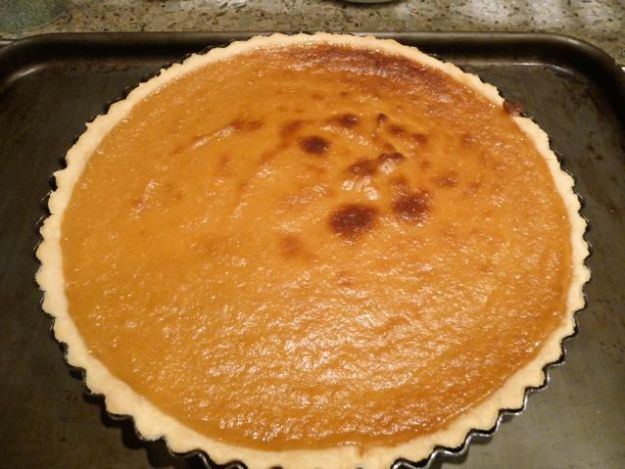
Pumpkin Pie!

The last time I made this I was nineteen and trying to impress a friend who was mad about all things American.  I produced something so revolting that we had to go to a very expensive café instead to calm ourselves down and get rid of the taste. I decided on the strength of that experience that America was indeed a foreign country and that they ate some very strange food there. It occured to me briefly that I might have made it wrong but my ego was such that I simply relegated it to the little drawer of gustatory horrors (the one where the boiled pigs trotters that I was offered once in Greece resides)  and thought no more about it.

Fast forward to November ’09 when Mandy invited me for a proper Thanksgiving supper at which there was turkey and corn bread and for dessert there was a pie like this one. Much to my surprise it was really good so I removed PP from the drawer of horrors and promised myself I would make it one day.

What did I do wrong all those years ago? At a guess I didn’t drain the pumpkin purée properly. If you use one of those big round orange jobs then you have to really drain the purée before you mix up the filling.  I think that’s all there is to remember, it might be why Americans tend to buy the purée in tins. But I couldn’t find a tin of the stuff and I did have my failed Jack O’Poodle.

I read the Guardian piece on pumpkin pie but really didn’t fancy making a pie with 145 g of maple syrup.  The recipe I chose in the end is more or less the one Mandy recommended from the hummingbird bakery cookbook There are some great looking American cakes in there! And the recipes are all in grams not cups which suits me fine.

To prepare the pumpkin purée: We cut the pumpkin into chunks, roasted them in the oven until they were soft for 45 minutes at 170 C. Then  I scraped the flesh off the skins. Puréed the flesh in a food processor till smooth. Put the whole lot in a sieve and let it drip overnight. I toasted the seeds separately and have been doing my impersonation of a gerbil ever since.

I found a dish as near to 23 cm in diameter as I possessed;   a flan dish with a drop out bottom, a proper pie dish is on my wish list now!

I used the Hummingbird pie crust which is made of

  • 260 grams plain flour
  • 1/2 tsp salt
  • 110 g unsalted butter

The pastry is made by rubbing the above ingredients together to a sandy consistency and then bringing the pastry together with a little water, maybe a tablespoon or so. The Hummingbird book talks about beating the pastry until you have a smooth even dough.  I followed all this and the crust that results is what I would call a hardish pastry, the sort that you can hold in your hand without it collapsing.  I think if I was going to make the pie again I would use a pastry with more butter and not mix it so much as I prefer a shorter textured pastry, but this was good. I am not such a pastry expert anyway. Whatever pastry you use, always chill it in the fridge after you have mixed it, and ideally once again after you have rolled it out for your dish. An hour is usually plenty of time for the first chill.

I roll out pastry these days between two sheets of clingfilm and it makes life a lot easier.

At some point measure out and mix the following ingredients together until you have a smooth lumpfree mixture.

  • 425g pumpkin purée
  • 1 medium egg
  • 235 ml evaporated milk
  • 220 g golden caster sugar
  • 1/4 tsp ground cardamom  ( instead of cloves which I don’t like)
  • 1 tsp salt
  • 3/4 tsp ground cinammon
  • 1/4 teaspoon ginger
  • 1 – 2  tablespoons plain flour

Pour this into the pastry and bake in a preheated oven at 170 º C/325 ºF until the filling is firm.  The book says 30 – 40 minutes but mine took more like an hour.

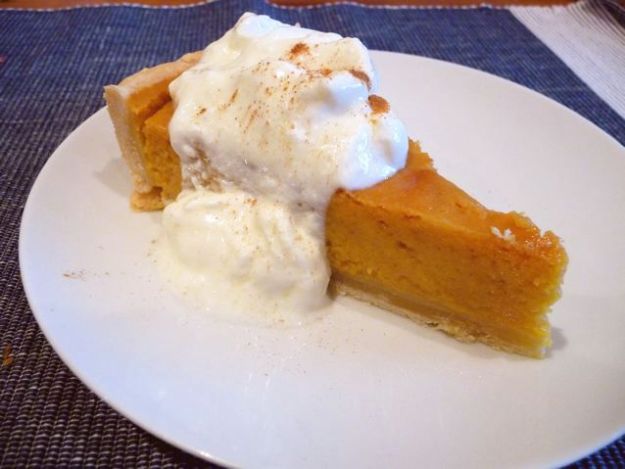
I left it to cool till the next day and we just had some for lunch with a big dollop of yoghurt and a sprinkle of cinammon on the top and it was so good I had two pieces!

Greed is my undoing.