UK National Fungus Day

Bread in Morning Light

Sunday 13th October 2013

Some bread out of the oven cooling in the early morning sunshine.  The one in the front is in reality very small but because of the way the camera works it looks quite big. Thanks to the kefir and whatever yeast (fungus) we use we have bread and can make our own as human beings have been doing for a very long time now.

Fungi and bacteria work with the building blocks of the living world to create and destroy. The more we learn about how they work the more amazing they turn out to be. Maybe we should have a National Bacteria Day too?

Here are some of this autumn’s crop of fungi photographs, taken at Westonbirt, Glos and in the Forest of Dean, which is on the other side of the Severn Bridge, but on this side of the border with Wales. It is a good year for fungi in the UK, so have a go at seeing what you can see, or go to an organized walk or a talk, lots around ! This is the first UK Fungus Day and I think it is a great idea!

I have had a stab at identifying some of them but as ever warn people not to go by my identification as I am not a mycologist. I used to be quite reasonable at identifying about a dozen or so of the edible fungi, but as the years pass I have got out of practice. If you go on a fungi foray with a group or a self-styled forager be sure to ask them how they learnt their trade and ask lots of questions. In these straitened economic times, people turn to all sorts of ways to earn a living and foraging and ‘teaching’ foraging is one of them.

For most of us, wild fungi are not an essential part of our diet, but rather a treat, a flavour, an aroma, something maybe that one wouldn’t desire if not driven by media hype and an urge for different experiences.

I am not saying don’t or that it is wrong to want to taste and touch new things, just be extremely careful. There are cases of poisoning each year, usually well-documented in the press, of people who eat the wrong fungi, or the wrong berries or plants.

What is fun and completely safe however, is to go out and take photographs and look for them. We are sticking to that this year unless we see the ones that I know I can id positively.

And not to create any confusion, we didn’t bring any of the fungi depicted here home with us, only took their photos. Please do not ask me to identify your fungi finds!
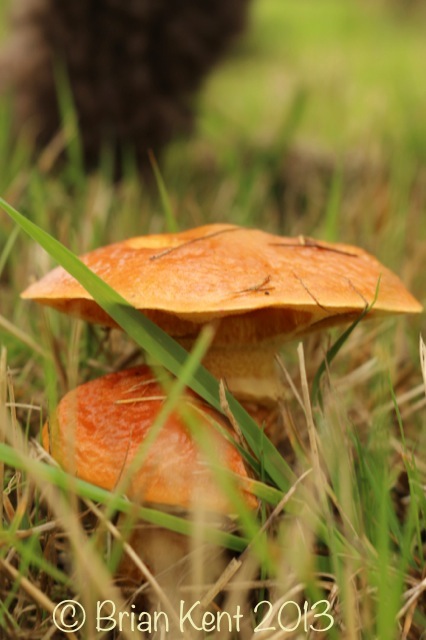
larch Boletus Brian Kent

I am pretty sure this is the larch boletus, with its spongy underside.

Yellow Stagshorn Calocera viscosa

and I think this is Yellow Stagshorn( Calocera viscosa) – because it was growing on wood but it’s not one we see very often, it is very small and delicate but has this outstanding glowing colour.
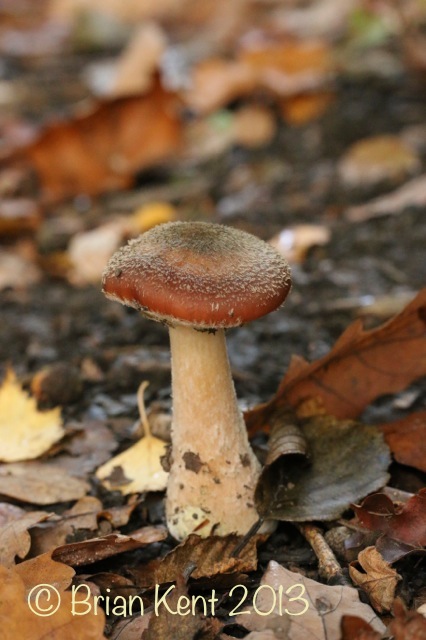
autumn fungi

Haven’t looked this one up yet…

…and finally the most glamorous one we have seen this autumn which I think is a magpie inkcap but I haven’t found an image exactly like it so who knows?

magpie inkcap?

One of the hardest things is keeping the dogs out of the field of shot, as anything that interests us, interests them and we don’t want them to eat the fungi either!

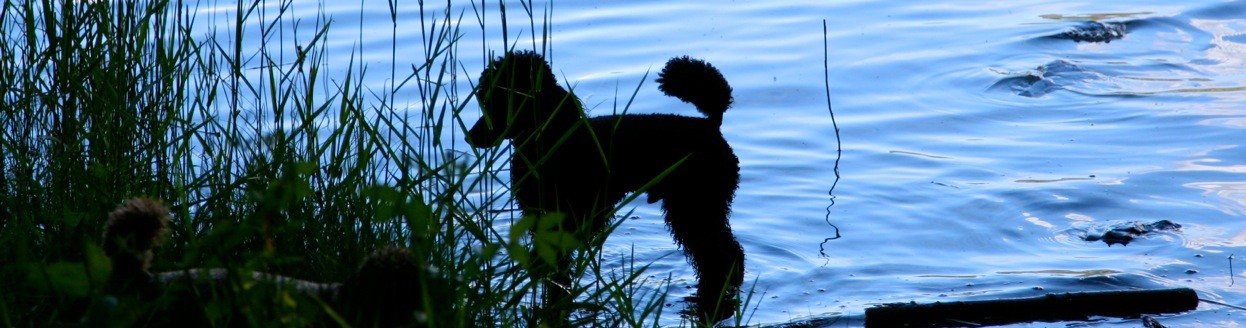
Anyone want to tango with a wet poodle?

Anyone want to tango with a wet poodle?

So for those of you who miss him, here is your small friend Zeb, following an exciting jump into a mud bath on the edge of a small pool which contained a stick of desire that he had to have, (just had to).  We are taking him and his sister to the beach this coming week. I forsee many early evening baths.

Red Admiral Flowering Ivy

8th October 2013

Red Admiral Ivy Flowers Clifton Bristol Zeb Bakes

I associate butterflies with summer and it isn’t summer anymore. However both yesterday and today the ivy on the Downs (where we currently walk the dogs) was crawling with honey bees and other species of wild bees, bluebottles and Red Admirals  – all feeding on the nectar from the flowers.

The moral of this tale is, don’t cut your ivy back before it has flowered, it provides valuable food for all manner of beings at a time of year when flowers are not so readily available.

Photo taken with great difficulty, this was the best of them, windy weather, a flighty butterfly and a little hand held camera which I have never really had the patience nor the inclination to learn to use properly.  I have a blind spot about cameras, I just want them to work, I don’t want to understand them. So I have tried to enhance the red which was brighter by far than the image portrays.

Hope you are all well!

Post script Date Kefir Loaves

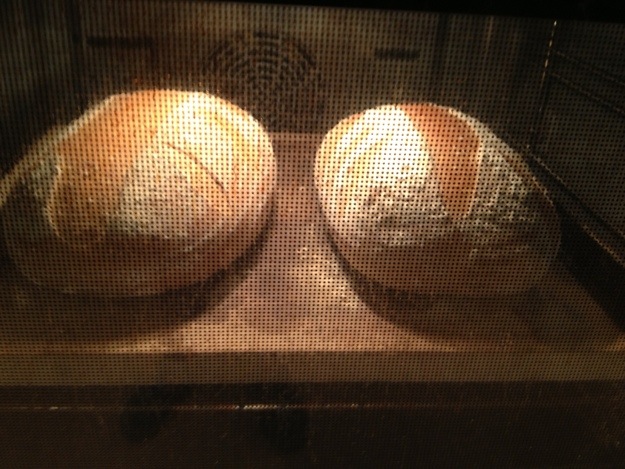
This is the same bread as the previous date kefir bread post but I have reduced the quantities to help my kefir buddies. I would have tacked this onto the end of the old post but it would get a bit long. So forgive me doing it this way. Please read the other post for full method etc. This makes two loaves which should fit in a domestic oven if you shape into ovals like this:-

20130908-084248.jpg

Numbers for a smaller quantity of dough which should give you two good sized medium loaves of approx 630g each (baked weight) or 1 and a half lbs – and thus less likely to make a mixer struggle.

For the preferment

115 g room temp water
150g fresh live kefir
187g strong bread flour
35g date syrup

mix well and leave in covered bowl for 18 hours

Final Dough

all of the above preferment plus…

225g – 275g water, hold back on some of the water till you see how dough comes together
640g bread flour – the final shape and lift of the loaf will depend in part on the type of flour you use, I tend to use about 50% very strong flour to get the crumb that Brian likes amd vary the other half to use stone milled flours.
12-15g of salt, depending on your preferences
20-30g of melted butter. I thnk it improves keeping quality and softness but you can leave this out or experiment with an oil you like instead.

Dough takes between three to four hours to develop to the point at which you shape it. I suspect it would start to get more sourdough like in taste if you retard it and that is not my goal with this bread. My aim is to get it baked roughly 6-8 hours after the final mix.

You can divide this into two and shape and bake in tins or shape free style, or make rolls, stuffed breads etc. If you mix with more water and maybe olive oil you could try for a foccacio type bread too. Possibilities!

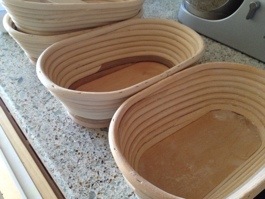
I used new Herbert Birnbaum 750g oval banettons with wooden bottoms for these loaves, like my very first ones from Germany, where I ended up sending Euros in an envelope, not a method I would recommend! These ones were purchased from The Weekend Bakery using PayPal (see Friends and Inspirations page for links) who offer excellent customer service and have a wonderful site packed with bready knowledge. You don’t need banettons to make this, you can shape freeform or use tins or improvise with a colander and an old well floured teatowel, or buy a florist’s wicker basket and line with a cloth.

20130908-084453.jpg

Fran (aka Narf7)  has just sent me photos of her uber cool home made organic soya kefir bread! Hoping she will write a post soon so I can link to it.  Link here now! I love the way bread brings people together across the world. Waves madly at Tasmania!

Abby has made the bread here on her Magic Ingredient post

Of bread and quinces’ has blogged here about ‘milk kefir bread and what we have in common’  and here on a water kefir hazlenut sage bread!

and my friend Fran M (aka Fancybake who lives in the North of England) has been busy making kefir bread too, she doesn’t blog so here is a picture that she sent me of her raisin kefir bread. She is a wonderful home baker who I met in Yorkshire.

and Pete in Swindon has made a formidable loaf topped with sesame seeds – read his delightful  blogpost  by clicking on the link.

kefir bread with raisins by Fran M

FancyBake’s  (Fran M’s) raisin kefir bread

If you have a go and don’t blog and want me to add a photo here let me know in a comment or if you want me to link to your blog post I will add it in here.