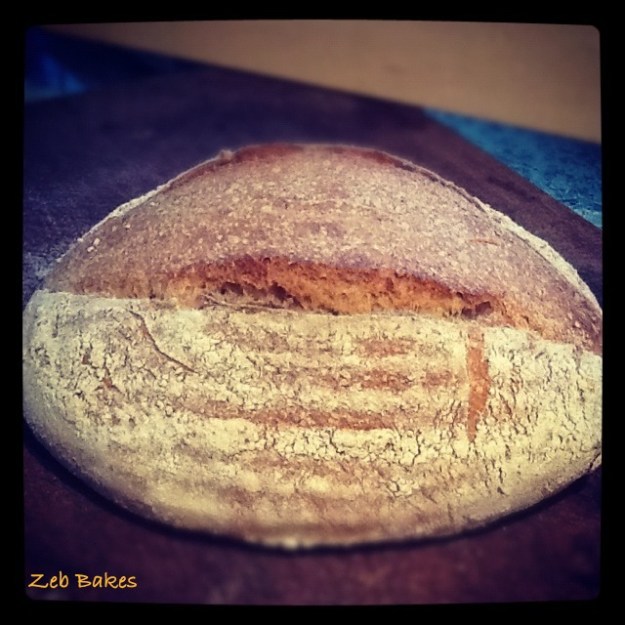
Spelt grain belongs to the wheat family of field crops. It is often described as being an ancient grain or a heritage grain. Interest in these heritage grains has increased in recent years, both on the part of consumers and amongst researchers into crop genetics with an eye to maintaining a gene reservoir for breeding programmes. The ancient grains are credited with being more adaptable to poor soils and harsh climactic conditions as well as having attractive nutritional attributes.
Spelt contains gluten and is not suitable if you have coeliac disease. It is claimed that some people find it easier to digest than bread made from more modern wheat; this is something that I am not qualified to comment on. I personally find rye bread easier to digest than wheat bread, but maybe that is because I ate a fair bit of it when I was a child, who knows?
I remember our first encounter with spelt flour vividly; Brian bought a bag home one day and said he was going to make Roman Centurion slipper bread, this was in the days when we really hadn’t done any bread baking at all at home and this was the recipe on the side of the bag. I can’t even remember which brand it was now. We mixed the dough and produced some very flat and rather strange bread that we didn’t like very much, deciding that Roman Centurions probably used it in their boots for extra liners, and the bag of flour disappeared onto the back of the shelf.
Recently I was asked by a friend if I could make them an all spelt loaf and I had to say that I wasn’t very good at making them, so I asked Andrew at the Loaf in Crich for his formula (having seen a lovely photo on Twitter of his loaves, looking all nicely risen with good open slashes) and he kindly shared the recipe and here it is for all to try.
Like so many of the breads and cakes I make I don’t make them over and over again until I get them absolutely right before I write about them here. I am not that sort of blogger. To a certain extent for me, every loaf is a bit of an experiment, I learn (or re-visit the same mistakes!) each time I add water to flour. Even though I have been baking for a handful of years now, the number of loaves I have actually made is probably less than a professional baker would make in a few days.
So after all that preamble – here goes!
Andrew Auld’s Spelt Bread (from the Loaf in Crich)
Andrew’s formula uses a rye sourdough starter to start the whole process off, which he calls a ‘rye sloppy’. If you only have a wheat starter then you can convert a small proportion of this to rye over a few days by feeding it with wholegrain rye flour and water instead. I keep both a wheat starter and a rye starter going, I refresh them once a week if I am not using them for baking and keep them in the fridge unless I am planning doing a lot of baking over a period of a few days. If you are not worried about a small proportion of wheat in your bread then just use your wheat starter.
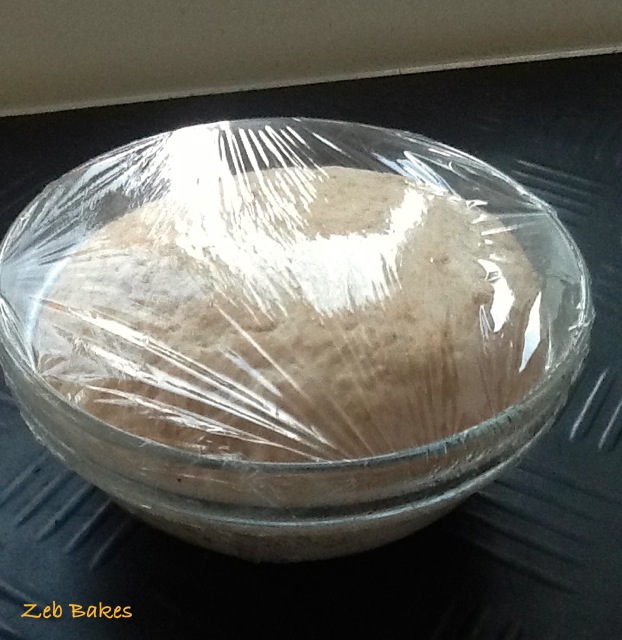
The day before you want to bake
1st stage
Mix a biga with
- 24 g rye starter
- 80 g water
- 100 g white spelt flour
- 100 g wholegrain (wholemeal) spelt flour
Leave in a covered bowl to ferment. The time this takes will depend on how warm it is. I left mine overnight.
2nd stage
- 640 g white spelt flour
- 160 g wholemeal spelt flour
- 80 g orange juice
- 12 g honey
- 12 g salt ( I upped this to 15g as I felt it was a bit low for my taste, I wonder if the low salt contributes to the faster proving times, that is something to bear in mind and salt is very much a personal preference)
- 440 g water
- 300 g biga (as from the first stage)
Mix all the above together well and leave for three hours to prove, folding the dough twice during that period.
Shape the dough as you like, I proved these in bannetons. I made three smallish loaves of around 550 g each, then leave for a shortish final prove. I baked these after 45 mins proving in front of a radiator – a much shorter time than I would usually leave a sourdough loaf on its final prove – and I think that has been my mistake in the past, leaving spelt too long on the final prove, Andrew’s note to me indicated that might be a good way to go.
When experimenting with a dough that is unfamiliar, do make notes, I would try and remember if it was hot or cold, if possible have a little temperature gadget in your kitchen. I have one from the Science Museum in London that is very useful. Note the ambient temperature and the times the dough has sat in prove (be honest here, if you forgot it, then write it down regardless!) and if possible take photos to jog your memory. Keep making the same dough and either shorten or lengthen the proof times and you will get a result you like in the end.

I baked these smallish loaves at 220 ºC for about 20 minutes and then reduced the temperature to 200 ºC for another 20 minutes and that seemed about right. I tend to bake my bread longer than many people do. I see commercially that bread seems to be baked for shorter periods of time, maybe a commercial oven is different but I prefer a ‘well-baked loaf’ nearly always.
My small thoughts : handle this dough gently, don’t knock the air out of it when you fold it, and be kind to the dough when you come to shape it; try and preserve the air that is in the dough from the first fermentation stage. The folding process stretches the bubbles that are forming and traps them in the dough, and they help to give the dough some structure.
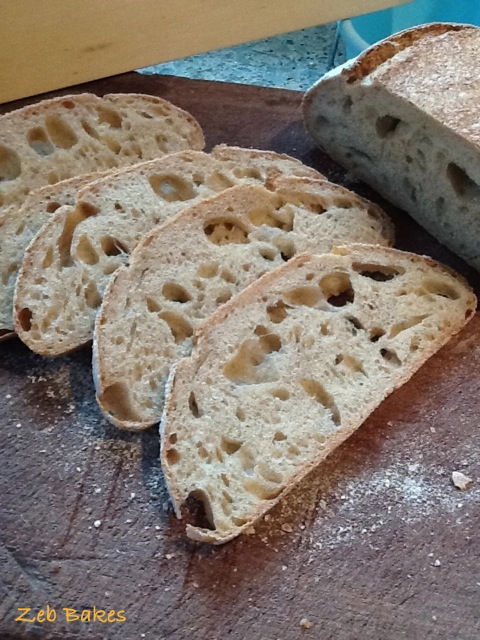
Don’t spend a long time staring at the dough once you have turned it out prior to baking it. Slash it simply with one long angled cut, slightly off the centre line as if you are slitting an envelope – the more cuts you make on the top, the more the dough will lose surface tension and flatten out. Decide what you are going to do before you turn it out and be quick and decisive and get it into the oven nice and speedily. An old slashing post of mine here might give you some ideas here.
Spelt flour is also lovely in biscuits and cakes, so you can always use it that way too.
I guess I should be thinking about festive baking… I have been reading lots of lovely blogs full of exciting projects, but I haven’t lifted a festive finger yet, no shopping, no crafting, nothing has happened here. This is not to say there won’t be any but don’t hold your breath!
If any other spelt fans want to share their tips and thoughts on baking with spelt I am all ‘ears’ !






 Zeb Bakes