If you are going to make your own bread on a regular basis, the method has to fit in with your lifestyle and the time you have, and the type of bread has to be one that you and your household enjoy eating.


If you are going to make your own bread on a regular basis, the method has to fit in with your lifestyle and the time you have, and the type of bread has to be one that you and your household enjoy eating.
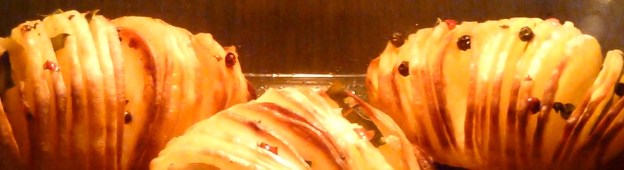

Hasselback potatoes were my all time favourite potato as a child. The name was exotic, from the restaurant in Stockholm where they originated. Crunchy edged slivers of silky, moist potato which could be delicately peeled back one sliver at a time and nibbled systematically. They didn’t appear very often on the table, but when they did I was always very happy to see them. Something like a packet of crisps in sautée form or maybe the potato equivalent of After Eights.
I have tried to make them over the years, but usually ended up getting very sad as I lost concentration and cut all the way through the potatoes and ruined them; over and over. I haven’t made them now for about ten years. I saw on a Swedish website that you could buy a special board to sit the potatoes in to do the cutting but thought it was just a bit crazy to order them. So I had stopped thinking about them and, like Eyore, gave up on trying as I felt incompetent every time I tried.
However I was reading the lovely Everybodylikessandwiches blog recently and – guess what (Tigger bounces back) – she gives a genius solution to the Hasselback cutting problem – I love her so very much for that. I don’t think she knows how much I love her. So here they are as done by me tonight. What’s the secret?
CHOPSTICKS!!!!
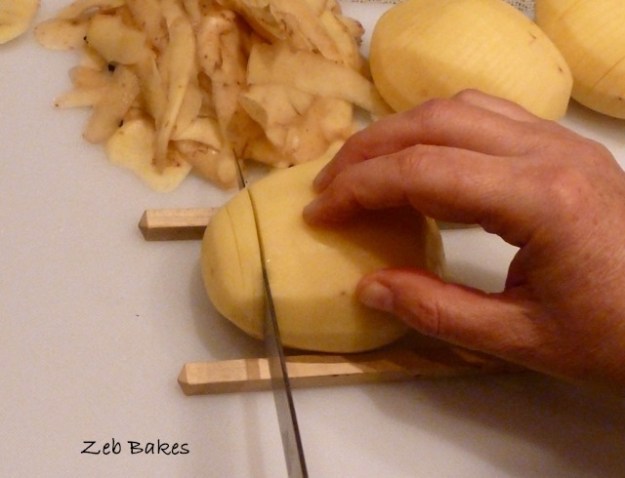
So I did it and they were perfect and I am so happy.I quckly peeled three big potatoes, and positioned them between two chopsticks on a board with a non slip bit of matting underneath and sliced down as thinly as I could for the best paper leaf effect. The photo above makes it look as if they are cut quite wide apart but the slices don’t really open up until they are in the oven; go as thin as you can manage. The chopsticks neatly stop you going all the way through. As I said – Genius !
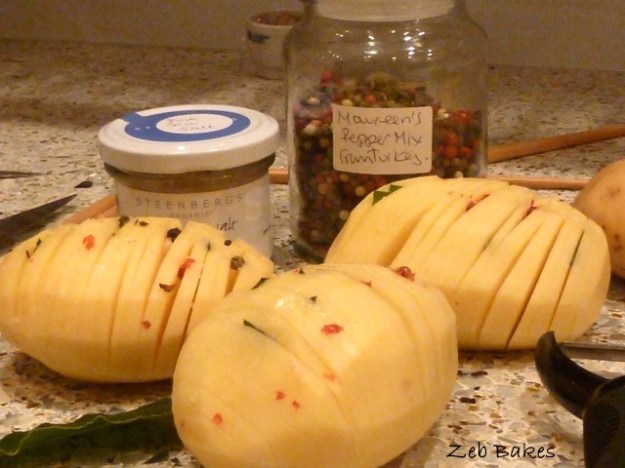
I layered mine with pink sea salt and multi coloured pepper corns and shreds of bay leaf from the garden and cooked them in duck fat, you don’t need very much. I roasted them for about 45 minutes at 175 º C, spooning the fat over a couple of times during that period, till they started to get that lovely colour and open up like a fan.
They are, if I may be permitted to say, completely fabulous, far less greasy than full on roasties, and very, very special.
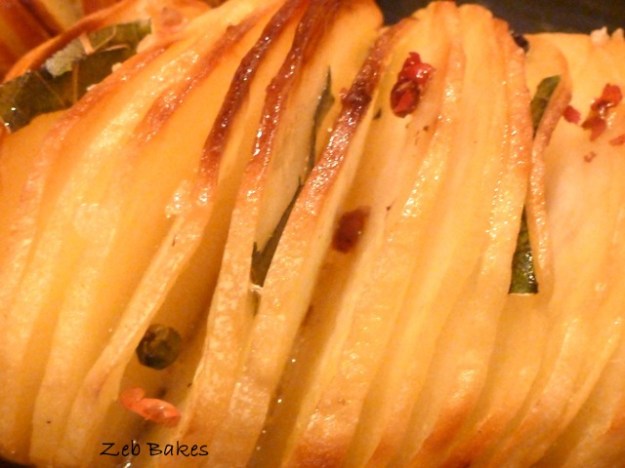
Get your chopsticks out and make Hasselbacks! Lots of different ways to season them so let your imagination run riot. They’re all good. Always!
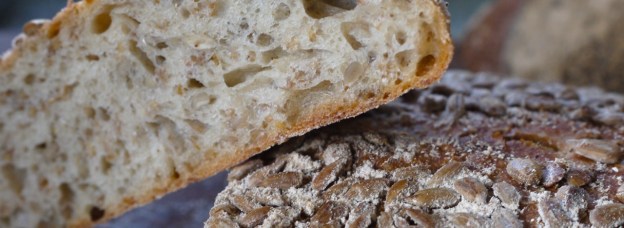
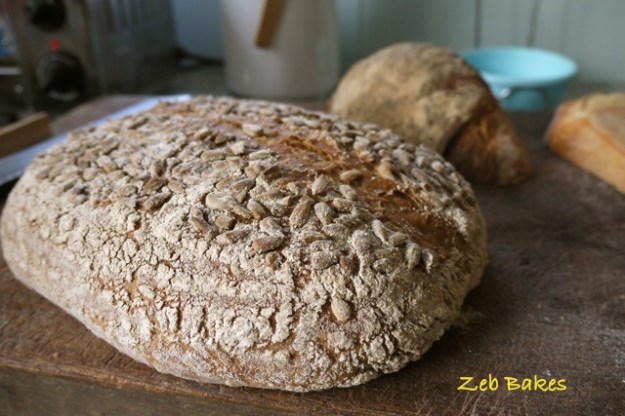
I recently made the Sunflower Bread with Paté Fermentée from Jeffrey Hamelman’s book Bread as I have got a bit behind lately with Mellow Bakers, the group that is slowly but surely doing its best to bake all the recipes in the book. This is one of those breads that is full of grains, so if you are a seedy person then it’s another variation to try.
I am not quite sure why this one came out so flat in profile. When I sliced into it it was reasonably aerated and I don’t think it was overproved, but it didn’t do much in the way of rising at any point so I think it was the load of grains, soaked chopped rye, sunflower seeds and some linseed that I added as I was short on sunflower seeds.

So far it’s been fine, but maybe this bread could have done with ten per cent very strong flour in the mix to give it a bit more lift. I was using Shipton No 1 for the flour in this one. Who knows? I’ll have to check out what the others made of this one when I post the link over on the Mellow Bakers forum. It’s been a while since I made a seeded loaf and I think there are other recipes which are less faff than this one and give you a similar if not better result than this one.
I also bake these breads at a lower temperature than Hamelman gives, simply because I don’t like these grainy breads to have very hard crusts. Any grains that are in the crust area then get super hard and are not pleasant to eat unless you have the teeth of a rodent. More people crack teeth on hard grains in bread than anything else according to my dentist. The trademarked ‘Granary’ in the UK being the worst culprit for this or so she says, not my words, hers!

I am not convinced that just soaking the chopped rye (which forms a hefty component of this dough) in cold water for four hours softens them enough either. Another time I would use warm water or gently simmer them to make sure they soften up and maybe soak them overnight in some fruit juice or ale as Dan Lepard does to great effect in his grain breads in the Handmade Loaf.
All the same this made a moist and tasty seedy loaf that improved in flavour and texture on the second day and was lovely with a rasher of middle cut bacon.

The sun came out for this shot!
Just a footnote: I wrote a couple of posts about this book (which is my second most useful bread book) a while back and I also came across this thread on the Fresh Loaf, which might also be of interest. It seems to imply that the most recent edition has had all the errors corrected. However, the only way to be sure that you get the most recent edition is to check the printing number at the front, and if you are ordering from an online supplier, they may well have old stock.
Patée Fermentée – For some reason this bread made with five different grains came out gloriously – so have a peek at that one if you want to see seedy loveliness!
 Zeb Bakes