
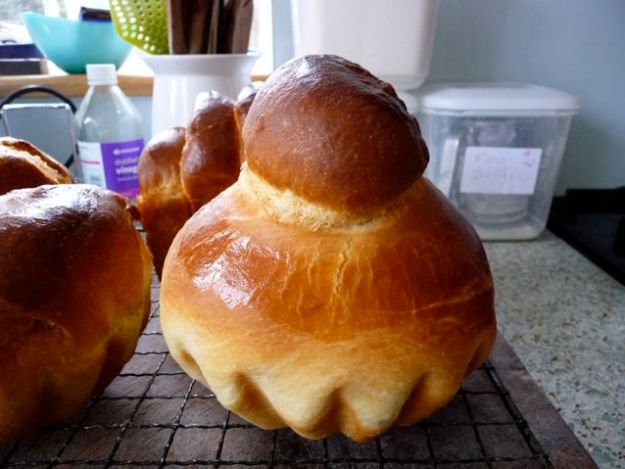
 I was saving this one up for the end of the month as I had a birthday and I thought a birthday brioche would be just the thing. That, and a lovely outing with my family for dim sum made for a fine celebration.
All the other Mellow Bakers who have made this one have enjoyed it. Pop over to the board to read their posts here. The recipe has been written up on several of their blogs, here is Zorra’s lovely chocolate filled brioche, Cathy’s great step-by-step post and Lien’s cute chicken baby brioches amongst many others. I’ve added my ‘numbers’ and brief instructions at the end of the post, though you really need the book for all the detail.
 I had two goes this month at making the brioche. I got in a complete muddle about the yeast and the columns, not helped by the fact that there is an error in one of the columns, which I knew about, but then managed to forget by the time I came back to make the brioche the second time.
For those of you who have not seen this book, each recipe is laid out with three different sets of weights and measures. The first, on the industrial scale is in pounds, the second (Metric) on a small bakery scale is in kilos, the third set is the Home set, and is in ounces and cups and teaspoons. Three different sets, all giving you a different final dough weight and there are errors in several of the recipes. Most of these have been picked up and annotated and there is a pdf of the errata sheet available here. I find the layout of this book challenging, even after baking from it now for several months.
 The first time I made the Hamelman brioche, I made a very small quantity, I used the Metric column and divided by 10%. The first lot I made took forever to rise, I got into a muddle about the yeast quantities and I think I used too little. I used the instant yeast, chilled everything, mixed the dough, put it in the fridge overnight and then made little balls and put them in tall muffin cases, originally used for mini panetonnes last year. The finished balls were light and airy, but didn’t fill the cases and though delicious looked a bit like muffins.
Last weekend I made the dough again, this time using fresh yeast from a local bakers and converting the Home column to grams. I had forgotten about the errata. So one way I ended up with 13 grams of yeast, but then when I checked it against the Baker’s Percentage table I ended up with 34 grams of yeast. Hmmm…. I checked with the other Mellow Bakers about converting from instant yeast to fresh yeast and in a complete crisis of confidence, emailed King Arthur Flour and asked them too. Everyone confirmed that they use a conversion ratio of 1:3 and that I was on the right track. Robyn solved the mystery of the two sets of numbers by kindly reminding me that there was a mistake in the Home column. There are great advantages to having a friendly forum to go to for help and advice!
The Kenwood liked having a full load of dough to work with, and mixed away purposefully. I stopped every now and then and attempted to sheet the dough, i.e. hold a blob by the corners and see if you can let it stretch gently out into a smooth sheet of dough. After twenty minutes of mixing, I decided it was good to go, I could see the strands of gluten and it looked smooth and shiny and to be honest, I had had enough by that point. An hour at room temperature, it shot to the top of the bowl. I degassed it furiously, it was alive with hissing bubbles – that fresh yeast! – and put it in the fridge to calm down overnight.

Second time around I was determined to use the brioche moulds I had picked up ages ago. I have looked at loads of instructions for shaping brioche a tete but I wasn’t very good at it. I am not very keen on working with the dough even when chilled. I can’t quite explain why, but I find it difficult to shape. I tried to roll out a strand, to make into a twist and it just wouldn’t roll out for me. I worried that if I overhandled it the butter would start to melt and the dough would get oily, so I went back to making what I hoped would work – my brioche shapes are best described as characterful! They reminded me of cottage loaves by the time they came out, leaning here there and everywhere.
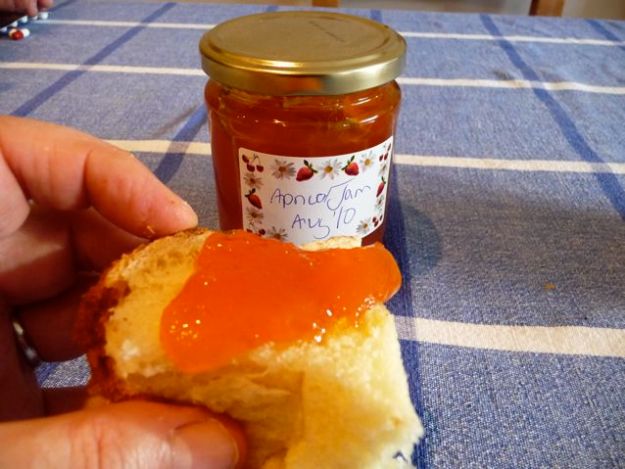
 The pay off: the aroma of brioche baking on a chilly weekend morning has got to be one of the best things ever! Warm brioche, soft apricot jam, a little sunshine – Zeb agreed, reminding me of his French origins. We loved this bread; its butter content means that it can’t be an everyday bread, but for holidays or special days or treats, it’s worth doing, life as a home baker wouldn’t be complete without a brioche once in a while.
In conclusion, I hope I haven’t given a bad impression of making this. It is in fact relatively straight forward if you follow the instructions. Chill all the ingredients, chill the water, chill the mixing bowl. Mix for the right length of time. Leave the dough over night, shape and bake. Just make sure you have your ingredients all weighed out correctly first and read the whole recipe through. I’ve got the hang of it now!
And always, but always, serve it warm. Cold brioche, like cold croissants, just isn’t right.

____________________________________________
My version of this brioche (adapted ever so slightly from Bread by Jeffrey Hamelman)
520 g bread flour
160 g high gluten/very strong bread flour
7 little cold eggs making 340 grams
60 g chilled water
11 g salt (less than stated in the original)
82 g sugar
340 g chilled butter, softened with a rolling pin, but still cold when added to the dough
34 g fresh yeast
Method:
Chill everything, even the mixing bowl. If you are using your hands to mix, regularly cool them down.
Mix everything apart from the butter for at least 5 – 7 minutes. You will get a very firm dough. The eggs must be completely incorporated. I mixed the water, eggs, sugar and yeast together first and then added the flours and the salt.
Then you add the chilled butter, piece by piece, and knead/mix till you have a smooth satiny dough, it takes forever and in theory you should be able to hold a piece up gently by the corners and watch it ‘sheet’.
When you are happy with the development of the dough, tuck some clingflim over the top, so no air can get in, leave for an hour at room temperature. Degas after an hour and put it in the fridge overnight. If you remember, degas it again a couple of times while it is in the fridge.
Shape the following day, and allow to almost double in size before applying eggwash to the top. I baked mine at 195 C. The four loaves took approx 30 minutes to bake. Cool on a rack for at least a minute before EATING!
I’ve just had to correct this as I left out the sugar, I blame Brydie’s Nana!




 Chicken Giblet Bread Sticks or Motivational Aids
 Zeb Bakes