

It’s one of those weeks. A new American pullman tin has found its way into my tin collection and needed to be road tested. I didn’t need this tin, but I wanted it. It was the right size and I had been eyeing them up for a long time. Why no English tin manufacturer produces these for the retail market is completely beyond me.
I also got a banneton with a wooden middle that looks like a Mexican hat. I didn’t need that either, but I really wanted it too. I tried it out and Bakery Bits let me exchange it for a proper couronne basket. This one has too narrow a centre to create a proper hole in a decent sized loaf. Some people spend their money on sensible things, like a night in the pub. I spend mine on banettons, Lego, cookbooks and dogtoys.
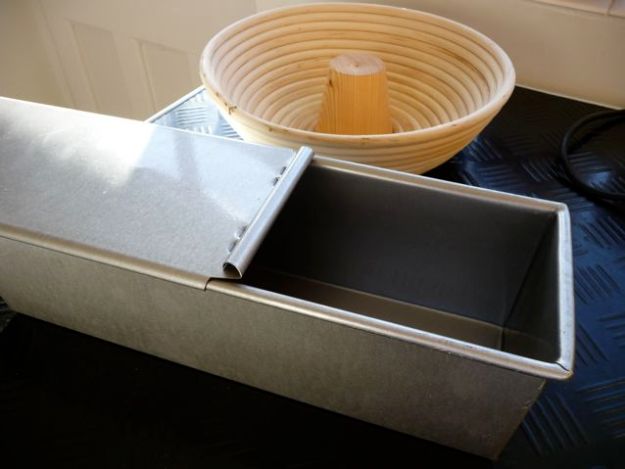
It worked beautifully and Brian is happy to have a soft thin crusted white loaf after eating sourdough for weeks. This bread won’t hang around long. Continue reading
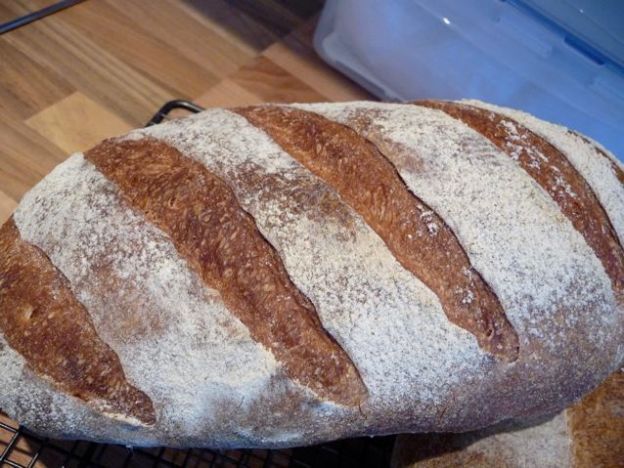
 I’m going to start by being pernickety. This bread, and the two variations in this section of Bread by Jeffrey Hamelman, are confusingly called Whole Wheat breads. They are in fact made with 50% wholegrain flour and 50 % strong white bread flour. In England the term wholemeal is used to describe a bread made only with wholegrain flour and it is one of the few bread names that is covered by
 There is nothing French or even Norman about this bread, though the formula is based on the Normandy Apple Bread (NAB) from Bread by Jeffrey Hamelman. This is one of the breads the
  Zeb Bakes